
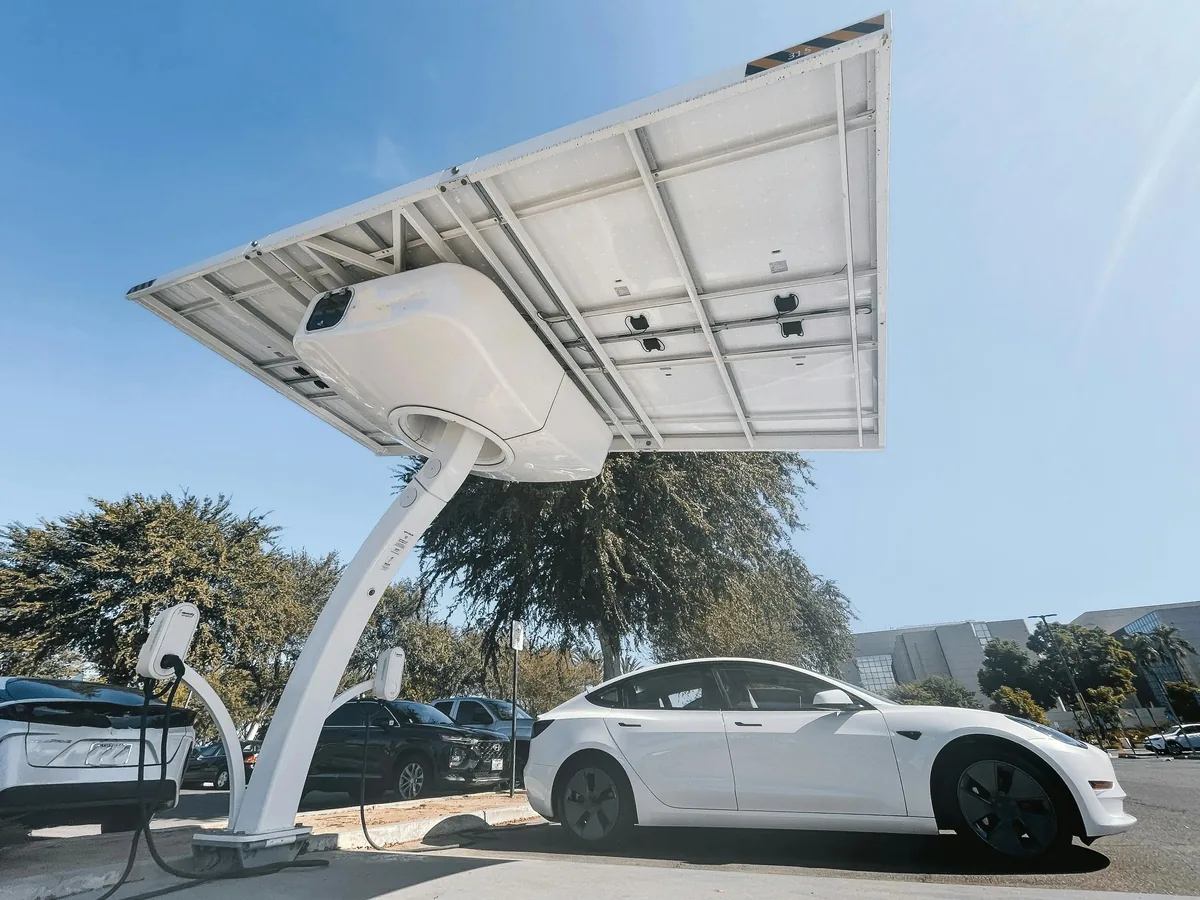
An open-air EV charging station takes the full summer sun all day. Charger housings heat up, charging cables get hot enough to trigger power derating, and drivers wait in the heat while their cars charge. At the Sudianlai charging station (Incubator Park site) in Suzhou, Anhui, the operator tried a different fix: our radiative cooling paint and film on the chargers and the most exposed parts of the site. The retrofit cools without a plug, without refrigerant and without using any electricity.
Why chargers struggle in summer heat
Hot housings, slower charging
A charger standing in the sun can reach a surface temperature above 60 °C in summer. That heat soaks through the housing into the power electronics. To protect themselves, chargers cut their output when they get too hot, and in the worst case they shut down. Sustained heat also shortens the life of electronic components and charging cables.
A worse experience for drivers
Drivers feel the same heat. They plug in, scan the code and wait under a hot canopy, often handling a connector and a screen that have been sitting in the sun.
Why shading alone is not enough
Sunshades and ventilation help, but they do not change how the materials themselves behave. A painted steel housing or canopy still absorbs sunlight, stores the heat and passes it inward. Radiative cooling tackles that absorb, store and release cycle at the surface.
The retrofit: paint plus film
Where each product went
The station used the two products where each fits best:
| Surface | Product | Why this product |
|---|---|---|
| Charger housings | Radiative cooling paint | Sprays or rolls onto shaped metal surfaces, edges and corners |
| Distribution boxes | Radiative cooling paint | Covers doors, vents and hinges without disassembly |
| Canopy | Radiative cooling film | Bonds quickly to large flat areas with an even, factory-controlled finish |
| Equipment baffles | Radiative cooling film | Flat panels that shade the chargers, so cooling them cuts the heat they radiate onto the equipment |
How it cools
Both products work in two ways at once:
- High solar reflectance: they reflect most of the incoming sunlight back to the sky, including the near-infrared part that carries much of the sun’s heat.
- Strong mid-infrared emission: they release the surface’s own heat as infrared radiation through the 8 to 13 μm atmospheric window, where the air lets that radiation pass straight out to space.
In short, the surface sends sunlight back and sheds its own heat at the same time, with no energy input. Our guides to radiative cooling paint and radiative cooling film explain the physics in more detail.
Key properties of the two products
| Property | Paint | Film |
|---|---|---|
| Solar reflectance | ≥ 0.90 | ≥ 0.95 |
| Emissivity (8 to 13 μm) | ≥ 0.90 | ≥ 0.90 |
| Water contact angle | 152° | 120° |
| Best suited to | Shaped and detailed surfaces | Large flat surfaces |
The high water contact angle means rain rolls off and carries dust with it, which helps the surface keep its reflectance outdoors. More product details are on the radiative cooling coating and radiative cooling film product pages.
Results at the station
After the paint and film were applied, the treated surfaces at the station ran 8 to 10 °C cooler than the normal ambient reference. Less heat reaching the surface means less heat conducted into the chargers.
The station’s operation showed benefits for three groups:
- The chargers: lower surface temperature, less risk of heat derating, and a longer service life for electronics and cables.
- Drivers: a noticeably cooler connector and screen, safer plugging and unplugging, easier scanning and a more comfortable wait.
- The operator: no electricity, no moving parts and almost no maintenance, so the savings continue year after year.
Not shade, but cooling
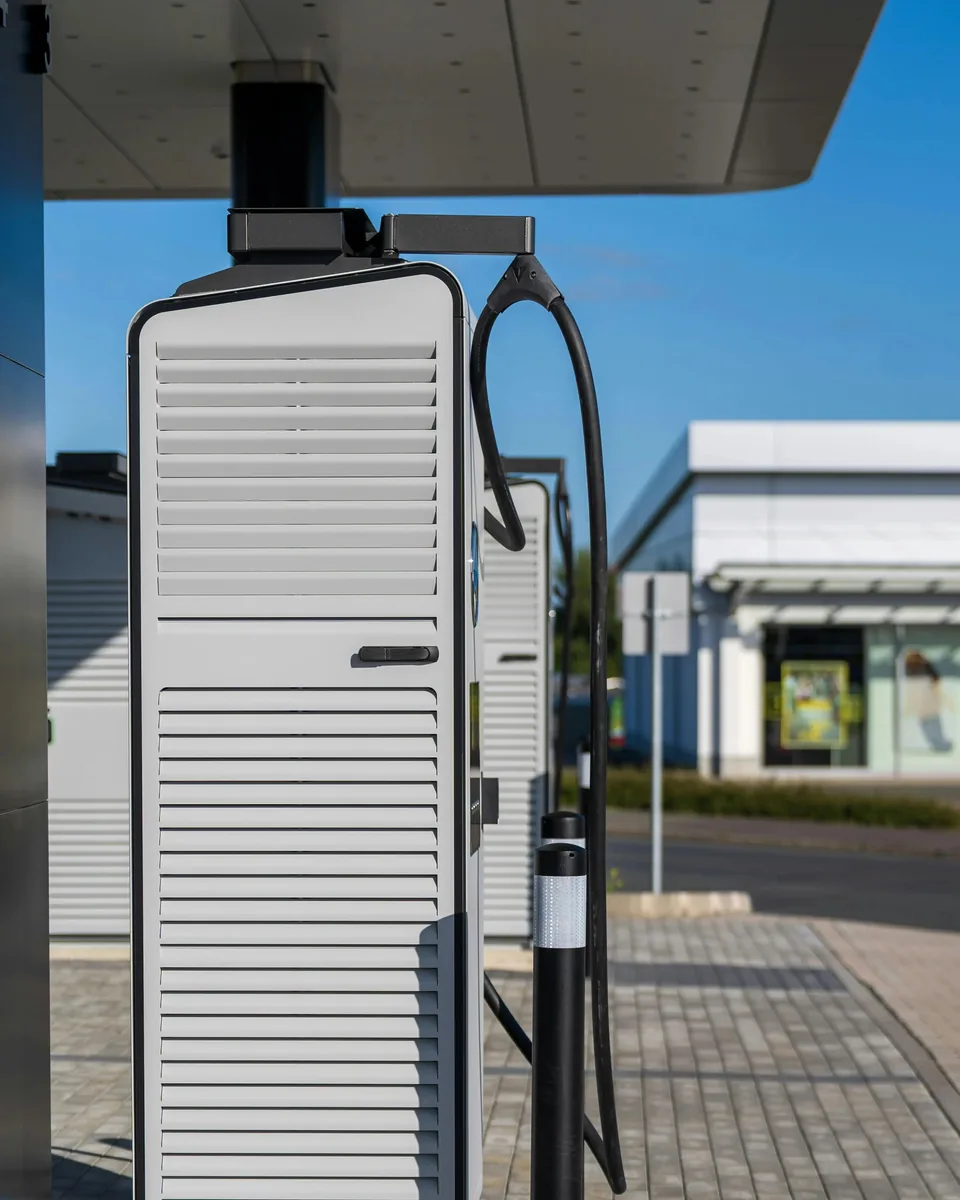
A sunshade or an ordinary reflective paint only blocks part of the sunlight. Radiative cooling materials also remove heat: besides reflecting sunlight, they actively radiate heat out to space. It is cooling that comes from physics rather than electricity.
This kind of passive thermal management suits any heat-sensitive equipment in transport and energy infrastructure, including:
- EV charging stations and battery swap stations
- Energy storage cabinets
- Outdoor distribution boxes
- Telecom cabinets. See our telecom cabinet case study for a 30-day side-by-side test.
For charging infrastructure in hot regions, the Suzhou project shows a low-cost, zero-energy and long-lasting way to keep equipment cooler.
Frequently asked questions
Which parts of a charging station should be treated?
Paint suits charger housings and distribution boxes; film suits the canopy and flat equipment baffles.
Does radiative cooling replace air conditioning?
No. It is a supplementary measure. It cuts the heat entering from outside so the air conditioner or refrigeration unit runs less, but the existing cooling equipment stays in place.
Does it need any power or maintenance?
No. There is no plug, no refrigerant and no moving parts, so there is nothing to run and almost nothing to maintain.
Cool down your charging site
If you operate charging stations, swap stations or outdoor energy equipment in a hot climate, send us the number of chargers, the canopy area and the location. We will reply with a recommendation and a quote, and we can send samples so you can test one charger first.
Ahonesty radiative cooling paint and film are made by Shandong Huacheng High-Tech Material Technology Co., Ltd. in Qingzhou, Shandong. WhatsApp: +853 6649 6268 | Email: shawn@ahonestymaterial.com
Photos are for illustration and show typical open-air charging equipment.