
Every refrigerated truck carries a cost that is easy to see and hard to cut: the energy its refrigeration unit burns. On a sunny day the outer walls of the box heat up fast, heat keeps soaking through to the cargo space, and the unit has to work overtime to hold the set temperature. Fuel or electricity use climbs, and so does the risk of breakdowns. Our radiative cooling film, applied to the outside of the box, cuts that heat gain without any power. Here is what it changed in testing.
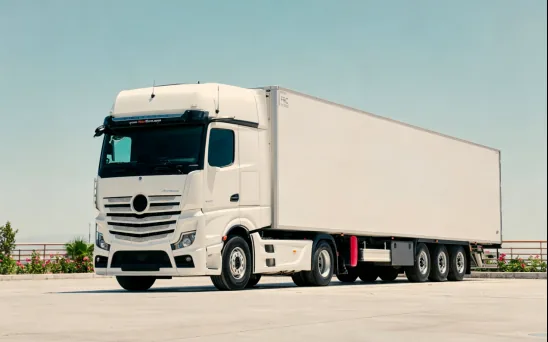
Why refrigerated truck bodies overheat
A refrigerated box is a large, flat surface parked and driven in full sun. The roof and side walls absorb solar heat, and even with insulation, that heat works its way inward. The refrigeration unit must remove it on top of the heat from the cargo and from door openings. The hotter the box skin, the more often the unit cycles on and the more energy it uses.
Most efficiency measures focus on the unit itself or on route planning. Radiative cooling film tackles the problem from the outside: it stops much of the heat from getting in at all.
How the film works
The film needs no electricity. It works through two mechanisms:
- High solar reflectance: it reflects most of the heat in sunlight, both the visible and the near-infrared parts, so the box skin absorbs far less.
- Mid-infrared emission: it radiates heat from the surface out to space through the 8 to 13 μm atmospheric window.
No plug, no refrigerant and no moving parts, yet the covered surface keeps shedding heat. Our guide to radiative cooling film explains the physics in detail.
Test results
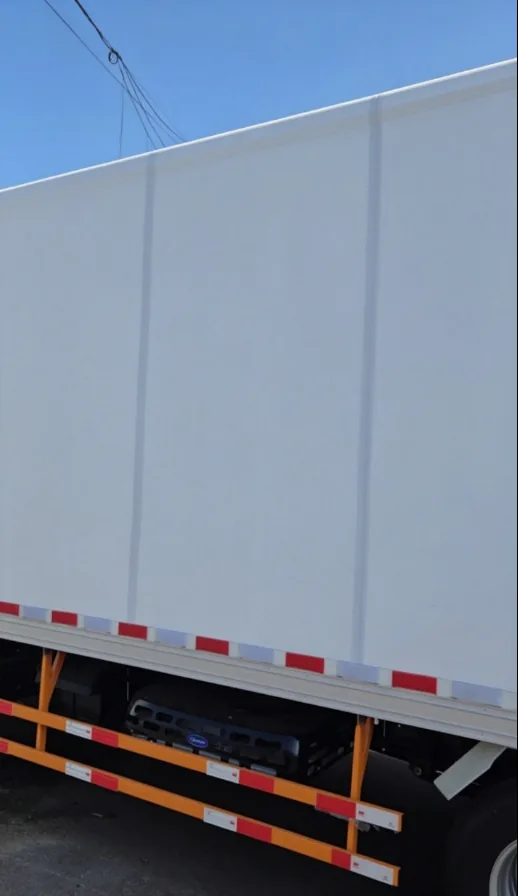
After the film was applied, testing on the refrigerated box showed the following:
| Measure | Result with radiative cooling film |
|---|---|
| Peak outer wall temperature | 23.6 °C lower |
| Average temperature inside the box | 2.9 °C lower, with a more even temperature distribution |
| Heat flux through the box roof | 16.7% to 46.3% lower |
| Refrigeration unit start-ups | About 9.1% fewer, with energy use falling accordingly |
| Pull-down time | 16 minutes shorter to cool from ambient to target temperature, a 29% gain in cooling efficiency |
What the numbers mean in practice
- Lower energy cost: fewer compressor cycles means less fuel or electricity per trip.
- Faster pre-cooling: the box reaches its target temperature sooner before loading.
- More stable cargo temperature: smaller swings help protect product quality.
- Less strain on the unit: shorter run times can reduce wear and the risk of breakdown.
Notes on use
- Radiative cooling film is a supplementary measure. It does not replace the refrigeration unit.
- Results depend on sunlight, ambient temperature and driving conditions, so they vary between vehicles and routes.
- The film works best together with the box’s existing insulation, combining reflection with insulation.
- It also has waterproof and anti-corrosion properties, which help extend the life of the box body.
Key film data, from the radiative cooling film product page:
| Property | Result |
|---|---|
| Solar reflectance | ≥ 0.95 |
| Emissivity (8 to 13 μm) | ≥ 0.90 |
| Radiative cooling power | Up to 100 W/m² |
| Salt spray, 1,500 h | ΔE 0.6, no peeling |
Frequently asked questions
How much did the film reduce refrigeration unit start-ups?
In testing, the refrigeration unit started about 9.1% less often, and energy use fell accordingly.
Does the film replace the box insulation?
No. It works best together with the existing insulation, combining reflection with insulation. It does not replace the refrigeration unit either.
Will the film damage the truck body?
No. The film also has waterproof and anti-corrosion properties, which help extend the life of the box body.
Cutting refrigeration energy without new equipment
Saving energy on refrigerated trucks does not have to mean buying new vehicles or redesigning routes. Radiative cooling film is a low-cost, zero-energy and easy-to-apply way to keep heat out of the box you already have, so the refrigeration unit can work less.
The same approach works for other cold chain equipment. See how a single layer of film helps pharmaceutical cold chain boxes and cold storage roofs.
If you run a refrigerated fleet, send us the vehicle type, box dimensions and number of vehicles. We will reply with a recommendation and a quote, and we can send samples so you can test one truck first.
Ahonesty radiative cooling paint and film are made by Shandong Huacheng High-Tech Material Technology Co., Ltd. in Qingzhou, Shandong. WhatsApp: +853 6649 6268 | Email: shawn@ahonestymaterial.com