
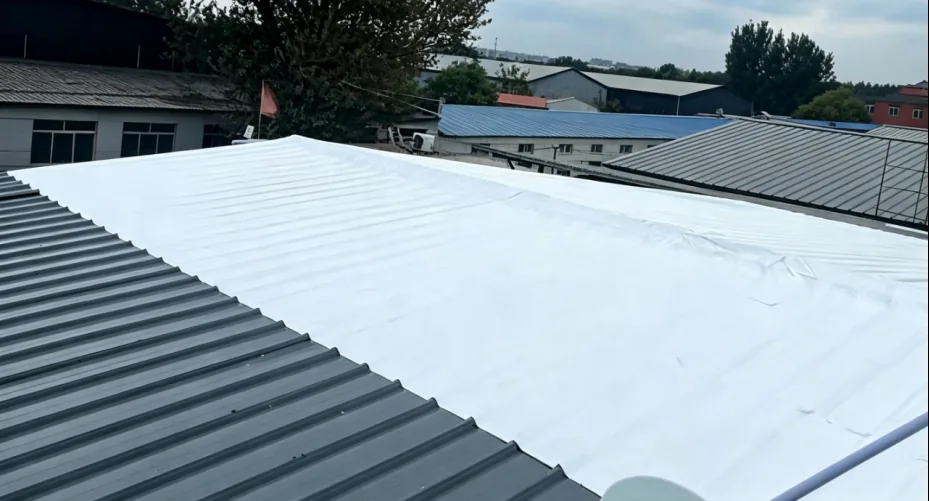
Cold storage is one of the most energy-hungry building types there is. The refrigeration units run all year, and electricity is one of the largest items in the operating budget. The roof makes it worse: it sits in direct sun all summer, and the heat it absorbs keeps flowing into the cold rooms below. A cold storage facility in Liaoning recently covered its roof with our radiative cooling film to cut that heat gain at the source and take some load off the refrigeration system.
The heat load problem on a cold storage roof
Where the extra heat comes from
Most cold storage roofs are metal panels or concrete. Under summer sun, the roof surface gets much hotter than the surrounding air. That heat conducts through the roof into the storage space, and the refrigeration units have to work harder to hold the set temperature. The result is higher electricity bills and more wear on the compressors.
Why insulation alone does not solve it
Insulation slows heat down, but it cannot stop a sun-baked roof from pushing heat inward hour after hour. Reducing how hot the roof gets in the first place cuts the heat that the insulation and the refrigeration system have to deal with. That is the job of radiative cooling film.
How radiative cooling film works on a roof
Our radiative cooling film uses passive radiative cooling. Two mechanisms work together:
- High solar reflectance: the film reflects most of the ultraviolet, visible and near-infrared sunlight that hits it, so the roof absorbs far less heat.
- Efficient infrared emission: the film radiates the heat stored in the roof surface as infrared radiation through the 8 to 13 μm atmospheric window, the band where the air lets that radiation pass straight out to space.
Together, these make it possible for the film surface to stay below the ambient air temperature. The process uses no electricity, has no moving parts and needs no extra maintenance. Our guide to radiative cooling film explains the physics in more detail.
Why film suits cold storage roofs
| Feature | What it means for a cold store |
|---|---|
| Fast installation | The film is thin and light and goes straight onto the existing roof, with no removal or structural work |
| No power draw | It runs passively, so it adds nothing to the facility’s electrical load |
| Weather resistance | Built for long-term outdoor exposure on a roof |
| Waterproofing | The film itself is waterproof, which helps protect the roof deck |
Key data for our film (more details on the radiative cooling film product page):
| Property | Result |
|---|---|
| Solar reflectance | ≥ 0.95 |
| Emissivity (8 to 13 μm) | ≥ 0.90 |
| Radiative cooling power | Up to 100 W/m² |
| Water contact angle | 120° |
Expected results
Based on data from similar installations, covering a cold storage roof with radiative cooling film brings three changes:
- A cooler roof surface than before installation.
- Less heat entering through the roof, which eases the load on the refrigeration units.
- Smaller swings in storage temperature, which helps keep stored goods in a stable environment.
The actual effect depends on sunlight, roof construction and the existing insulation, so results vary from project to project.
What the film does not replace
Radiative cooling film is a supplementary measure. It does not replace the refrigeration units or the insulation layer. For cold stores with strict temperature requirements, the refrigeration system and the insulation design remain the main means of temperature control. The film reduces the heat they have to fight.
Frequently asked questions
Can radiative cooling film go over an existing cold storage roof?
Yes. The film is thin and light and is laid directly on the existing metal or concrete roof, with no removal or structural work.
Does the film replace the cold store’s insulation?
No. Insulation and the refrigeration system remain the main means of temperature control. The film reduces how hot the roof gets, so less heat reaches the insulation and the refrigeration units.
Is the film waterproof?
Yes. The film itself is waterproof, so it also helps protect the roof deck.
Would coating be better than film on a cold storage roof?
For a large, flat metal roof, film is usually faster and gives factory-controlled thickness. Coating is the better fit where the roof has many penetrations, complex geometry or a concrete surface that a roll cannot follow neatly. Both use the same cooling principle, and both can be quoted for the same roof area.
What a similar roof retrofit requires
The work follows the installation sequence used on this project:
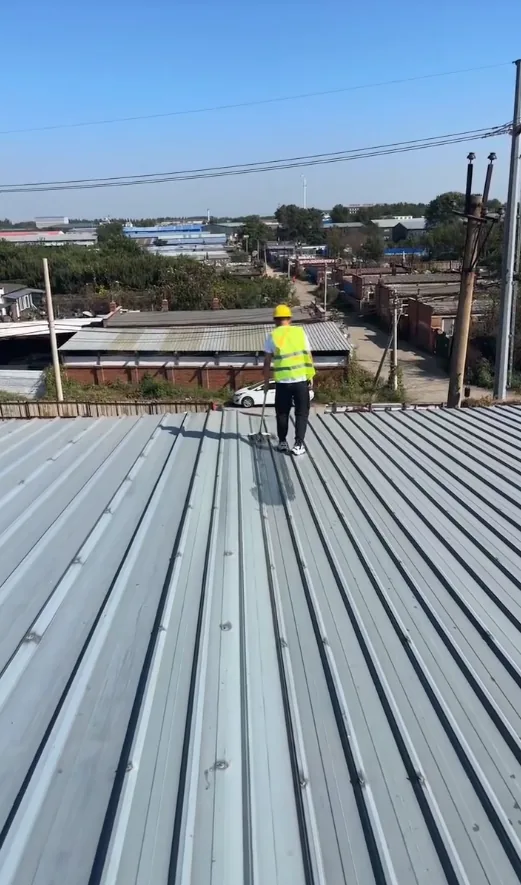
- Check the roof: metal or concrete, condition of seams, fasteners and any existing waterproofing.
- Repair before covering: leaks, loose fasteners, severe corrosion and unstable coatings.
- Clean and dry the surface; remove dust, oil and sharp projections.
- Pre-lay and position the film, then peel the liner and press it down, working out trapped air.
- Overlap panels by 3-5 cm, seal edges and details where required, then inspect seams and penetrations.
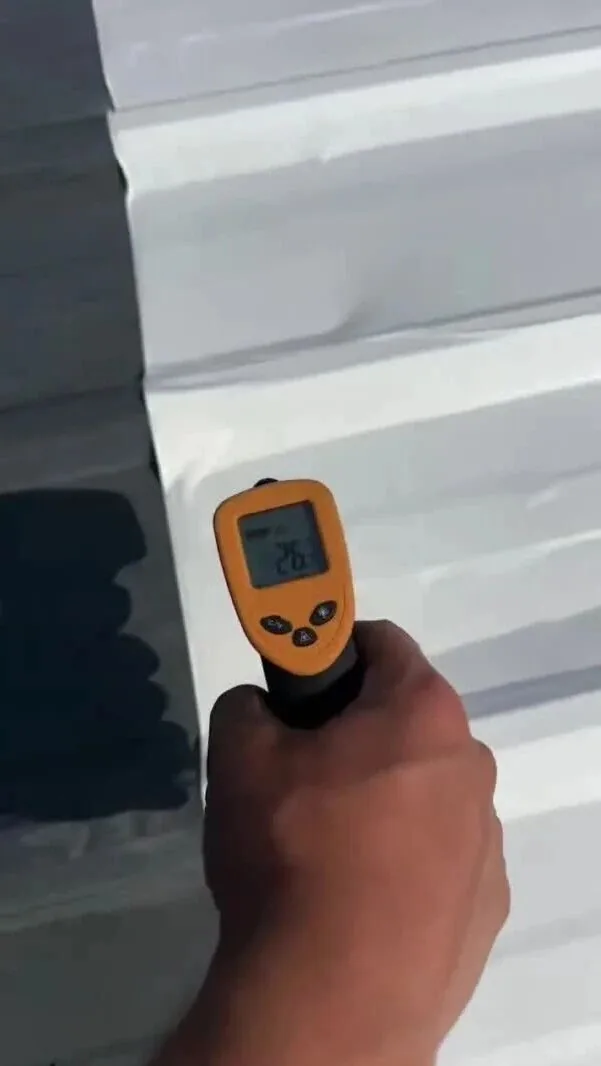
A pilot section is worth doing before the full roof: it confirms adhesion on the actual substrate and gives the operator a before-and-after temperature reading. The film product page lists thickness, roll size and test data; the film selection guide compares the technology routes; the radiative cooling overview covers both formats.
Cooling a cold store without adding refrigeration
Bringing down a cold store’s cooling load does not always mean adding refrigeration capacity. Radiative cooling film is an electricity-free, maintenance-free and easy-to-install way to cut heat gain at the roof and help the facility run with less effort through the summer.
If you run a cold store, a cold chain warehouse or a loading dock in a hot climate, send us the roof area, roof type and location. We will reply with a recommendation and a quote, and we can send samples so you can test a section of roof first.
Ahonesty radiative cooling paint and film are made by Shandong Huacheng High-Tech Material Technology Co., Ltd. in Qingzhou, Shandong. WhatsApp: +853 6649 6268 | Email: shawn@ahonestymaterial.com