Outdoor telecom cabinets sit in full sun all summer. Inside, the BBU, RRU and power modules throttle or shut down when the air gets too hot, and the air conditioner runs for most of the day to stop that. In April 2026 we ran a 30-day side-by-side test with a base station operator in Changle County, Weifang, Shandong, to see how much our radiative cooling products change that.
What was tested
The site and the two cabinets
The test used two outdoor cabinets at a high-speed rail base station. Both held the same model and number of devices with the same power draw.
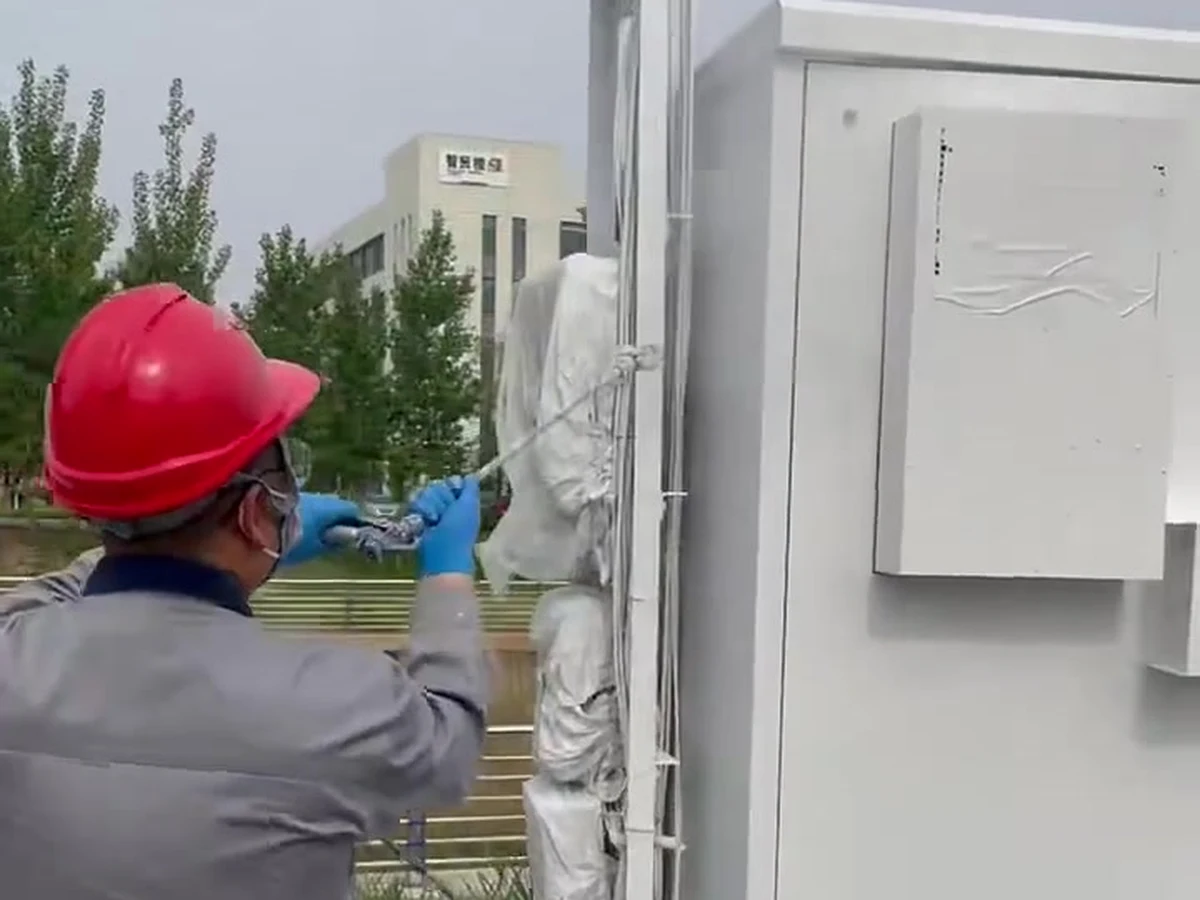
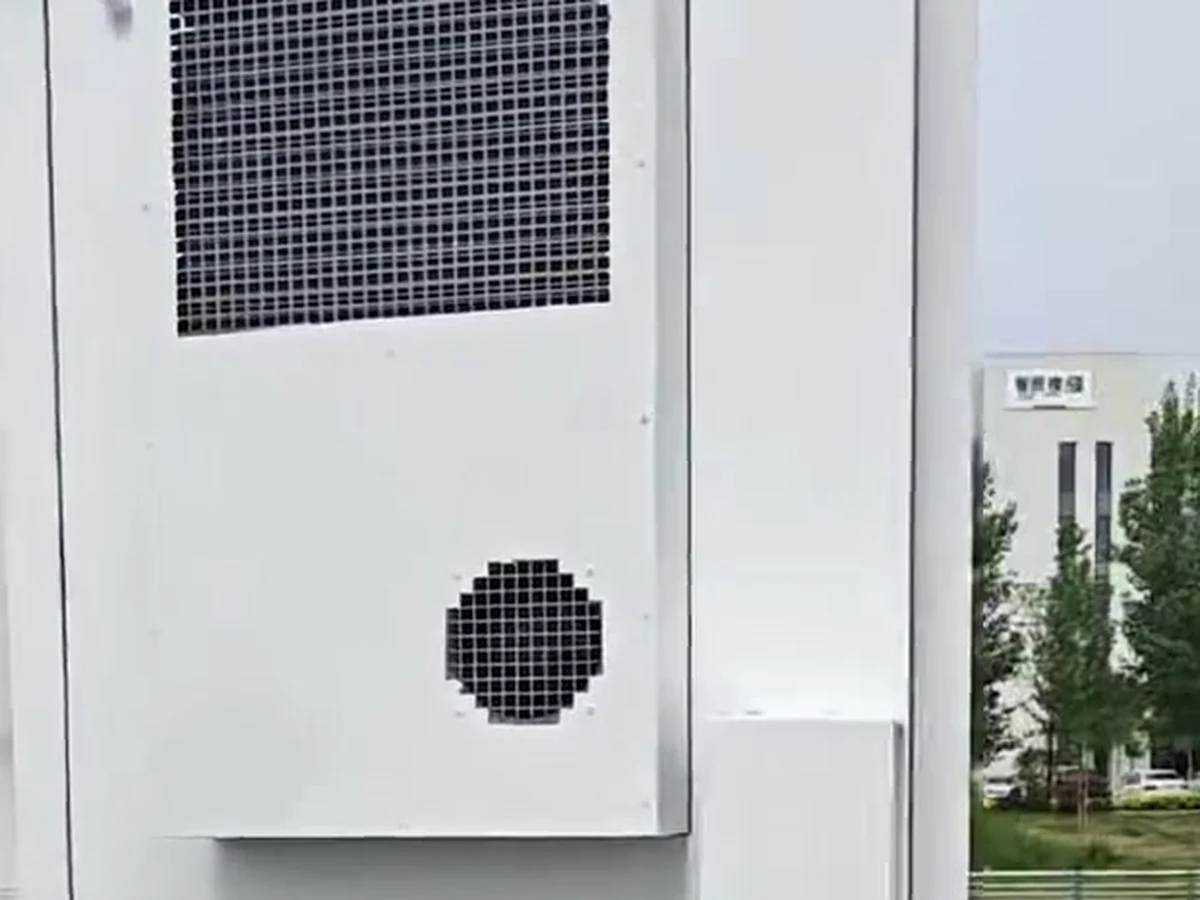
- Cabinet A (test): the side walls were coated with our radiative cooling paint and the top was covered with our radiative cooling film.
- Cabinet B (control): left in its original factory finish.
How it was measured
Readings were taken every day from 9:00 to 18:00, the hours of strongest sun, for 30 days in a row from 1 to 30 April 2026. The period covered sunny, cloudy and overcast days.
- Surface temperature: PT100 thermocouples (accuracy ±0.3 °C) and an infrared camera
- Inside temperature: an air probe at the centre of each cabinet
- Outdoor air temperature: an outdoor thermometer
Why the coating cools
The paint and film both reflect most of the sunlight that hits the cabinet, so far less heat gets into the steel. They also send heat out as infrared radiation through the 8 to 13 μm atmospheric window, where the air lets it pass to the sky. The cabinet loses heat this way even in direct sun, without any power. Our guides to radiative cooling paint and radiative cooling film explain the physics.
Results
Surface temperature
Over the 30 days, the coated cabinet’s surface was on average 19 °C cooler than the control cabinet, and the largest difference was 24 °C. Readings at midday (12:00 to 14:00) on four typical days:
| Date | Weather | Outdoor air (°C) | Uncoated surface (°C) | Coated surface (°C) | Difference (°C) |
|---|---|---|---|---|---|
| 3 April | Sunny | 26 | 42 | 23 | 19 |
| 12 April | Strong sun | 28 | 45 | 24 | 21 |
| 21 April | Cloudy | 23 | 35 | 22 | 13 |
| 28 April | Strong sun | 27 | 46 | 22 | 24 |
On sunny days the coated surface stayed at or below the outdoor air temperature, while the uncoated cabinet ran 16 to 19 °C above it.
Temperature inside the cabinet
Inside the coated cabinet the air was on average 3.4 °C cooler. Hourly readings on a sunny day:
| Time | Outdoor air | Uncoated cabinet inside | Coated cabinet inside | Difference |
|---|---|---|---|---|
| 10:00 | 27 °C | 36 °C | 32 °C | 4 °C |
| 12:00 | 28 °C | 35 °C | 31.5 °C | 3.5 °C |
| 14:00 | 28 °C | 35 °C | 31.7 °C | 3.3 °C |
| 16:00 | 26 °C | 34 °C | 31 °C | 3 °C |
The gap inside is smaller than on the surface because the air conditioner ran in both cabinets throughout the test and the equipment kept producing heat. Even at the hottest time of day, the coated cabinet stayed far below the 55 °C level at which the equipment starts to throttle.
Alarms and power use
During the 30 days the uncoated cabinet raised three high-temperature alarms. The coated cabinet raised none.
The site’s total power bill for the month was 90 yuan lower than for the same period in 2025. Based on this, we estimate that a single base station can save about 10 to 15% on air-conditioning costs. This is an estimate from one site over one month, not a measured figure for every site.
At night
With no sun, the coated cabinet’s surface ran 3 to 5 °C below the outdoor air temperature on average, which helped the equipment shed the heat built up during the day.
Condition after 30 days
At the end of the test the coating showed no chalking, peeling or yellowing. The surface still repelled water, with a contact angle of at least 120°, so rain washed most of the dust away, and the cooling effect dropped by less than 2 °C. Adhesion was rated grade 0 in a cross-cut test (GB/T 9286).
What this means for telecom sites
For an existing site, coating the cabinets is a retrofit that needs no shutdown and no extra power. The paint goes on the walls and other shaped surfaces, and the film covers the flat top. On this site the result was a cabinet that ran about 19 °C cooler on the outside and 3 to 4 °C cooler inside, with no heat alarms during the test month.
What a similar retrofit requires
A cabinet retrofit follows the same sequence as the test site:
- Survey the cabinet: substrate, surface area, existing finish, equipment load and access.
- Choose the format by surface. Shaped side walls and doors are coated; flat tops can be filmed.
- Prepare the surface: remove dust, oil, rust and loose material, and repair damage.
- Apply the system – primer, two cooling coats and topcoat on the walls; film on the top – and protect it from water during curing.
- Commission with surface and internal temperature readings, then compare them with the uncoated baseline.
No shutdown or extra power is needed. The work is planned around the site’s access rules, and a sample cabinet can be treated first so the operator can compare it with an untreated one. For the materials side, see the coating product page and the film product page; the radiative cooling overview compares the two formats.
Frequently asked questions
Can the coating be applied to a cabinet that is live?
The coating is applied to the outside of the cabinet and does not require the equipment to be opened. In practice the work is scheduled with the operator around access and safety rules. If a site cannot take any work during operation, the cabinet can be treated during a planned maintenance window.
How long does a cabinet retrofit take?
It depends on cabinet size, number of units and curing time between coats. The coating system needs at least 6 hours between the two cooling coats and 24 hours before the topcoat, so a single cabinet is normally a multi-day sequence rather than a one-hour job. Film on flat tops is immediate.
Does the treatment work at night or on cloudy days?
Yes. The infrared emission path does not need sunlight, and in the test the coated surface ran 3-5 °C below the outdoor air temperature at night. On cloudy days the solar gain is lower, so the absolute difference is smaller, but the surface still emits heat.
If you run outdoor cabinets, battery enclosures or base stations in a hot climate, send us the cabinet size, quantity and location. We will reply with a recommendation and a quote, and we can send samples so you can test one cabinet first.
Ahonesty radiative cooling paint and film are made by Shandong Huacheng High-Tech Material Technology Co., Ltd. in Qingzhou, Shandong. WhatsApp: +853 6649 6268 | Email: shawn@ahonestymaterial.com
Photos below are from a similar telecom cabinet project.