In hot summers, steel workshops, grain silos and storage tanks heat up fast in direct sun. Cooling bills go up, and roof and tank materials age faster. Radiative cooling paint cools these surfaces without power, and more engineering buyers are now specifying it.
Products on the market vary a lot. Some low-cost coatings cool poorly, while some brands charge a premium for a marketing concept. Many sellers are traders rather than manufacturers, so quotations carry extra margin and after-sales support is thin.
Huacheng High-Tech makes its radiative cooling paint in its own factory, using a proven functional powder formulation. Below we explain what the paint is made of and how it cools, compare it with the other types on the market, and set out why it is a cost-effective choice for industrial projects.
What our radiative cooling paint is
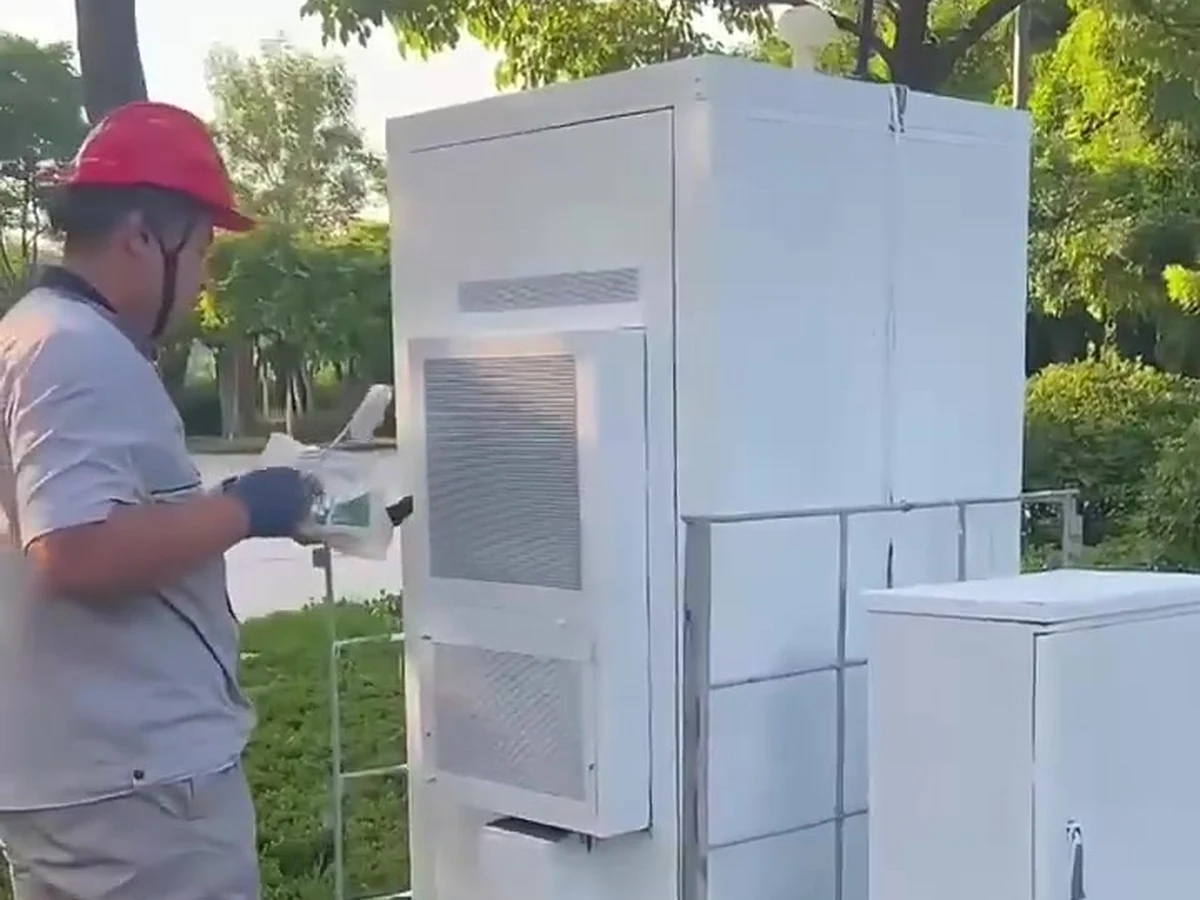
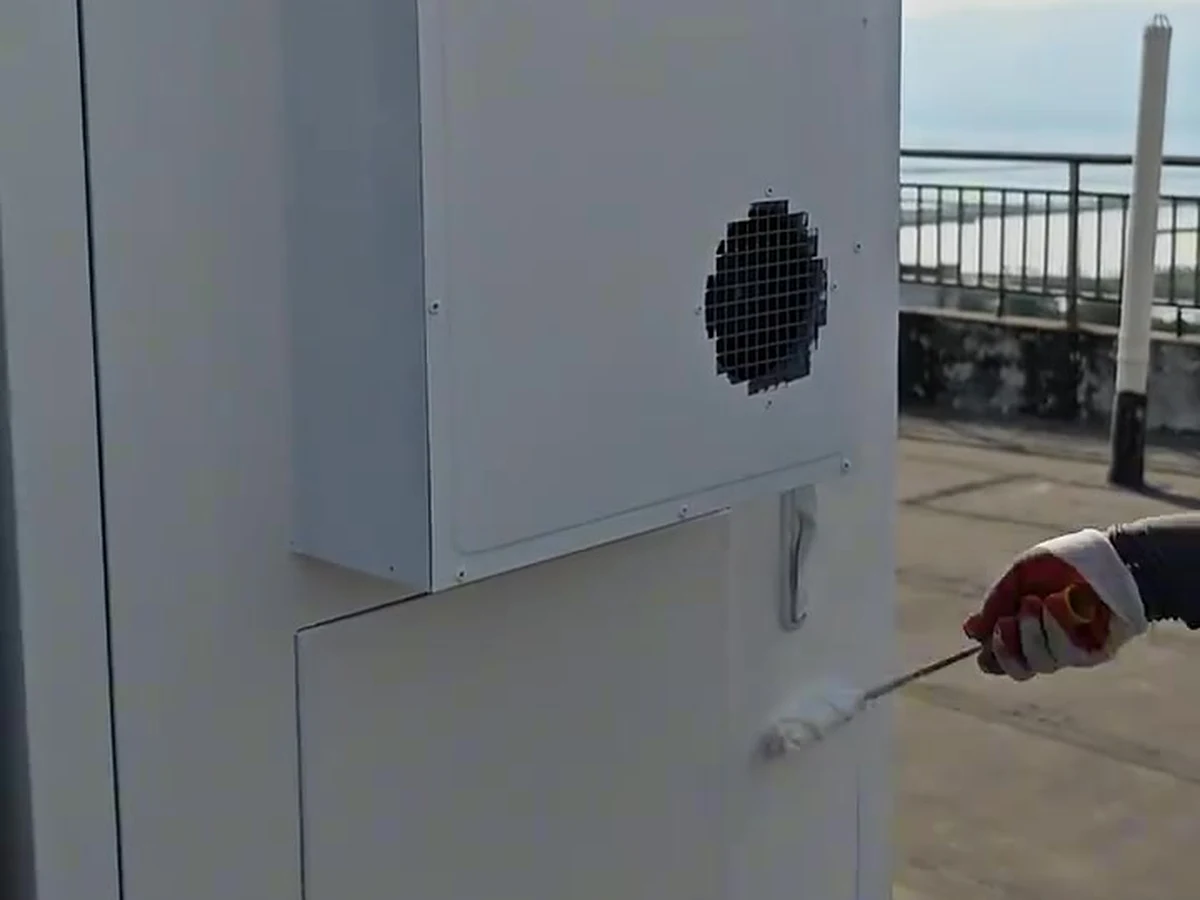
Our radiative cooling paint is a water-based coating for metal and concrete surfaces: roofs, walls, storage tanks, grain silos and outdoor equipment cabinets. It is applied by spray or roller and cools the surface it covers without any power.
What it is made of
The paint is applied as a three-layer system:
- a sealing primer that bonds the system to the substrate;
- the radiative cooling coating, made of modified nano functional powder in a weather-resistant resin;
- a superhydrophobic self-cleaning topcoat that sheds water and dust.
How it cools
The coating works on both sides of the heat balance. The functional powder reflects sunlight, so the surface takes in less solar heat. The coating reflects at least 90% of sunlight. It also gives off heat as infrared radiation, much of it in the 8 to 13 μm atmospheric window, where the air is largely transparent, so the heat passes out to the sky. Its emissivity in the 8 to 13 μm window is at least 0.90, and its hemispherical emissivity is at least 0.88.
Together these lower the temperature of roofs, tanks and silos, with a measured temperature drop of 3 to 12 °C. That reduces the air-conditioning load and slows thermal ageing of the substrate. Our guide to what radiative cooling paint is and how it works explains the physics in more detail.
How it compares with other radiative cooling paints
Most radiative cooling paints sold for industrial use fall into three groups: ours, conventional glass bead coatings at the low end of the market, and bionic concept coatings marketed on structures inspired by nature. Our figures are our published product specifications.
| Comparison | Huacheng High-Tech radiative cooling paint | Conventional glass bead coating (low-end) | Bionic concept coating |
|---|---|---|---|
| Solar reflectance | ≥ 0.90 | Lower | High, but rarely backed by public test data |
| Infrared emittance | ≥ 0.90 (8 to 13 μm); hemispherical ≥ 0.88 | Lower | Slightly lower |
| Durability data | 1,000 h artificial weathering: no blistering, peeling or cracking; 500 h salt spray: no damage | Performance tends to drop sooner | Limited public data |
| Supply source | Direct from the manufacturer | Often sold through traders | Brand distributors with added margin |
| Price level | Factory-direct pricing for the performance grade | Mid-range price for weaker performance | Premium for the concept |
| Supporting products | Paint and film from one supplier | Coating only | Coating only |
| Test basis | Benchmarked to T/CECS 10378-2024; test reports available | No dedicated standard | Mostly marketing claims |
Why choose our paint
Cooling performance you can check
The coating has a solar reflectance of at least 0.90, an atmospheric-window emissivity of at least 0.90 and a hemispherical emissivity of at least 0.88. Test reports are available for tender submissions and project acceptance, and you can check any of the figures against your own tests.
Direct from the manufacturer
We make the paint ourselves, so there is no chain of traders adding margin. For the same performance grade, our price is lower than that of concept-led brands, which helps keep project costs under control.
Paint and film from one supplier
Most suppliers sell only paint. We also make radiative cooling film, so one supplier can cover a whole project. The film is laid on warehouse roofs and on key areas such as vents and doors. The paint is sprayed directly onto walls, tanks, cabinets and other complex surfaces, where it forms a continuous coating with strong adhesion.
Weather resistance and lower maintenance
The weather-resistant resin and modified powder hold up to UV and outdoor exposure. In third-party testing the coating showed no blistering, peeling or cracking after 1,000 hours of artificial weathering and no damage after 500 hours of salt spray. It also passed the alkali, water and temperature-cycling tests with no abnormality, and its adhesion was rated grade 0.
The self-cleaning topcoat has a water contact angle of 152°, so rain carries dust away, and the stain resistance test showed a reflectance loss of only 3%. A coating that stays clean and intact keeps cooling for longer and needs recoating less often.
Low VOC and no heavy metals
The paint is water-based, with a VOC content of 16 g/L. Formaldehyde, benzene compounds and the heavy metals lead, cadmium, chromium and mercury were all not detected in third-party testing.
Where paint works better than film
Paint and film both cool by reflecting sunlight and emitting heat through the 8-13 μm atmospheric window. The difference is in how they reach the surface. Paint is applied as a liquid, so it follows welds, ribs, brackets, pipes and curved panels without cutting or seams. That makes it the practical choice for telecom cabinets, storage tanks, silos, concrete roofs and plant equipment – surfaces where a roll of film would need many small pieces and sealed joints.
Paint also allows local repair. If a coated area is damaged, the surface is cleaned and recoated; there is no need to order a patch of matched film. On a large flat metal roof, however, film usually wins on speed and thickness control. Our radiative cooling film guide covers that side of the decision, and the radiative cooling materials overview compares both formats.
How to evaluate a radiative cooling paint supplier
Most suppliers can show a reflectance figure. Fewer can show how the coating behaves after weathering, or explain who actually makes it. Five checks separate a specification from a sales sheet:
- Third-party optical data. Ask for solar reflectance and emissivity figures backed by a test report, not just a brochure value. Ours are a solar reflectance of at least 0.90 and an atmospheric-window emissivity of at least 0.90, and we send the test report on request.
- Weathering and corrosion results. A coating that chalks or peels loses its cooling effect. Look for artificial weathering and salt-spray hours, plus adhesion grade. Our system showed no blistering, peeling or cracking after 1,000 hours, no damage after 500 hours of salt spray, and Grade 0 adhesion.
- The full system, not one can. A radiative coating needs a primer and a compatible topcoat. Ask what those are, how they bond, and whether the supplier supports all three layers.
- Who manufactures. A trader adds margin and distance between you and the technical answers. Huacheng High-Tech makes the coating in its own factory in Qingzhou, Shandong, and we quote factory-direct.
- Application support. Ask for coverage guidance, coat thickness, recoat intervals and a project-specific recommendation. A supplier who cannot state these is not ready for an industrial roof.
The telecom cabinet case study shows how the system performed in a 30-day side-by-side test: 19 °C cooler on the surface, 3.4 °C cooler inside, and no high-temperature alarms.
Frequently asked questions
How long does radiative cooling paint last?
We test the system rather than promise a single service life. The coating showed no blistering, peeling or cracking after 1,000 hours of artificial weathering, and the case-study coating was still water-repellent with less than 2 °C loss of cooling after 30 days. Real service life depends on substrate, climate, surface preparation and maintenance, so we quote the system for the project rather than a universal number.
Does radiative cooling paint work on concrete as well as metal?
Yes, with the right primer. The system is used on concrete roofs and walls as well as metal roofs, tanks and equipment housings. Surface preparation differs by substrate, and the primer is chosen to match it.
Can it be applied in humid or coastal conditions?
The tested coating passed 500 hours of neutral salt spray with no damage and reached Grade 0 adhesion. For coastal or high-humidity sites we confirm the primer, topcoat and application window for the specific exposure before the project starts.
Is radiative cooling paint a replacement for insulation?
No. It reduces how much solar heat the surface absorbs and helps the surface release heat; insulation still controls heat flow through the building envelope. The two work together. On cold storage and process buildings, the coating lowers the heat load that insulation and refrigeration have to handle.
Get a free cooling assessment
When you choose a radiative cooling material, look past the marketing and check four things: test data you can verify, where the product is really made, how it holds up over time and what it costs over its life.
As the manufacturer, we offer a free cooling assessment and a solution matched to your project. Send us the project area, substrate type and location, and we will reply with a recommendation and a quote. For large roofs, see our radiative cooling film as well.
Huacheng High-Tech radiative cooling paint is made by Shandong Huacheng High-Tech Material Technology Co., Ltd. in Qingzhou, Shandong. WhatsApp: +853 6649 6268 | Email: shawn@ahonestymaterial.com